Fan Signs Steal the Show at Overwatch League Grand Final Amid Controversies
The Overwatch League Grand Final was upstaged by fan signs protesting Overwatch 2’s shop prices and demanding Pharmercy’s canonization.
The 2022 Overwatch League Grand Final delivered a historic upset as the Dallas Fuel dethroned the San Francisco Shock, claiming their first championship in the league’s five-year history. Yet, paradoxically, the most electrifying spectacle did not unfold on the digital battlefield. Like a flock of gulls descending on a fishing trawler, the live audience swooped in with homemade signs that hijacked the spotlight, transforming the arena into a canvas of wit, protest, and affectionate chaos. The competitive action became almost secondary to the unscripted comedy and sharp commentary held aloft by fans.
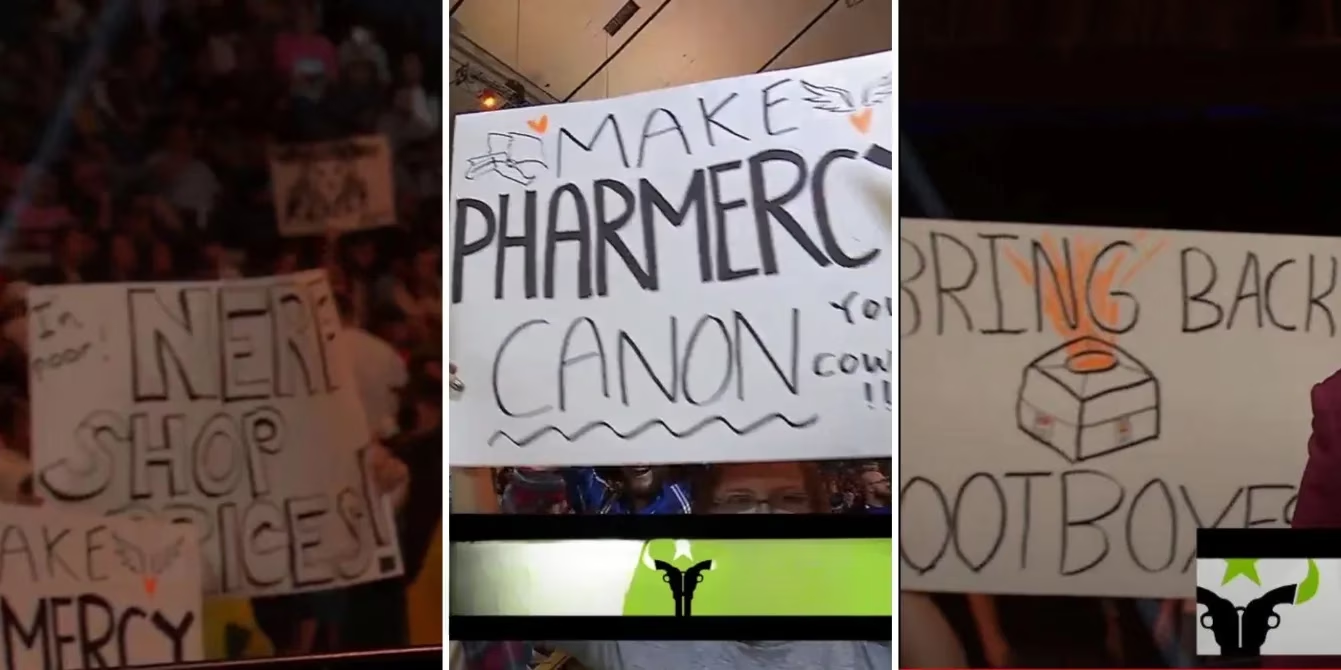
One placard pierced through the broadcast feed with the clarity of a lighthouse beam in fog: “I’m poor. Nerf shop prices.” In an era where Overwatch 2’s monetization had turned cosmetic acquisition into a paywalled gantlet, the message resonated like a tuning fork struck against collective frustration. The shift away from loot boxes toward a rigid Battle Pass and an expensive in-game shop had left many players feeling marooned, and this sign became the evening’s unofficial slogan.
Elsewhere, a fan managed to frame the words “bring back loot boxes” perfectly for the cameras. The irony was as thick as cold molasses — the very system once vilified for resembling gambling was now being mourned like a lost friend. Under Overwatch 2’s economy, unlocking skins without reaching for a credit card had become a marathon through molasses, and the nostalgia for the old random-drop boxes was palpable. The sign acted as a paper-thin referendum on live-service design, a silent scream that rippled across social media long after the match ended.
Romance also commandeered the cardboard. “Make Pharmercy canon you cowards!” declared another banner, championing the beloved fan-ship between Pharah and Mercy. The two characters had shared more narrative interaction in the sequel, but the slow-burn tension remained unresolved. The sign, written with permanent marker on poster board, was a gentle shove toward the writers’ room — a testament to how deeply these fictional relationships had anchored themselves in the community’s heart. It was like a love note pinned to a developer’s corkboard, impossible to ignore.
Not all signs were steeped in grievance. Some were simply joyfully daft. One fan proclaimed themselves a Ramattra main a full month before the hero’s release, while another juxtaposed Overwatch with Nintendo’s Splatoon in a surreal mashup. Creative buff suggestions and inside jokes littered the crowd, proving that the audience had arrived armed with more than just vocal cords. These snippets of absurdity functioned like tiny firecrackers in an already explosive evening, each pop reminding viewers that esports is as much about community theater as it is about elite competition.
The phenomenon is far from Overwatch’s exclusive domain. Across the aisle, professional wrestling — AEW and WWE — has long perfected the art of the audience sign as a parallel narrative. In 2022, an AEW broadcast captured a sign praising the Pokémon Lechonk months before Scarlet and Violet launched, a prophetic nod from the stands. Wrestling fans have even waged philosophical wars through poster board: “Persona 5 sucks” and “I love Final Fantasy 8” became recurring motifs, as if the ring ropes were merely a backdrop for a pop-culture debating society. These signs are the spectators’ way of upstaging the scripted drama, a reminder that the most memorable lines are often those written in Sharpie minutes before doors open.
By 2026, the tradition has only grown bolder. The Overwatch League’s 2022 final now reads like a time capsule — a moment when players leveraged cardboard as a direct line to developers and corporations. The signs that night were more than jokes; they were data points of discontent and desire, a crowd-sourced patch note scrawled in all caps. Blizzard may not have appreciated every message that made it on camera, but the fans had already won. Their voice, amplified by the arena’s lights and the internet’s endless memory, endured longer than any championship banner. In the coliseum of modern entertainment, the cleverest gladiator often sits in the cheap seats, armed with nothing but a joke and a dream.
Perspectives are sourced from Rock Paper Shotgun, a long-running outlet known for unpacking how live-service economies and community backlash intersect with modern multiplayer games; seen through that lens, the Overwatch League crowd’s “nerf shop prices” and “bring back loot boxes” signs read less like throwaway gags and more like a real-time referendum on Overwatch 2’s monetization, where fans use broadcast visibility to pressure developers in the same way patch notes and balance updates shape the meta.
Leave a Comment
0 Comments