Farewell from Chengdu Hunters: Overwatch 2 Goes Dark in China Amidst Blizzard’s Publishing Void
Overwatch 2 went offline in China after the Activision Blizzard-NetEase deal collapsed, prompting Chengdu Hunters to post a farewell message.
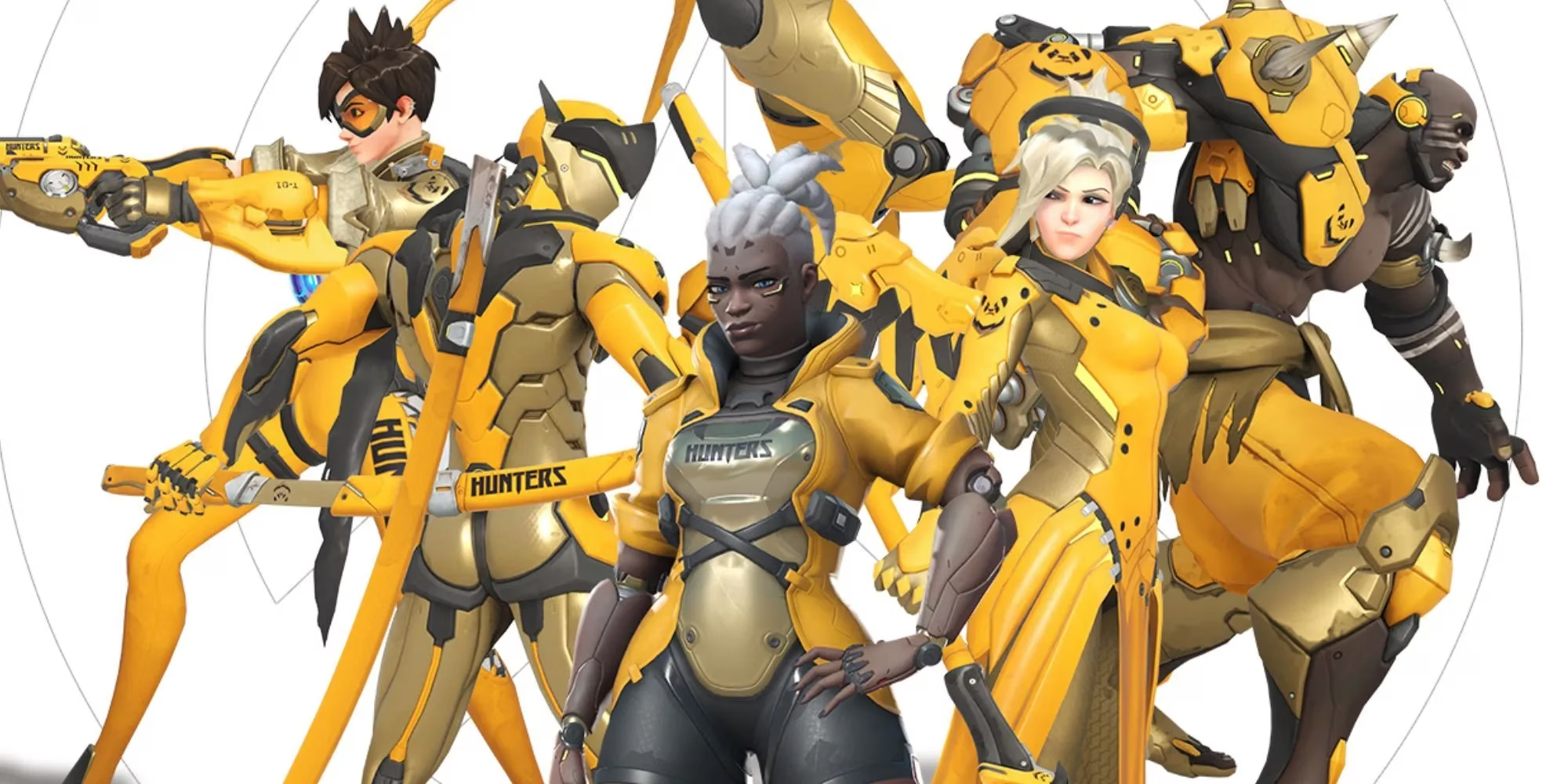
In early 2023, the Overwatch community in China faced a sudden and profound disruption as Overwatch 2 was taken offline, leaving millions of players unable to access the game. This followed the collapse of a longstanding publishing agreement between Activision Blizzard and NetEase, which had facilitated the distribution of Blizzard games in China for 14 years. The shutdown cast a shadow over the Chinese Overwatch League scene, prompting one of its most prominent teams, the Chengdu Hunters, to issue a poignant message to fans: "goodbye, and see you again." The Hunters’ statement, while somber, carried a glimmer of hope that the hiatus would be temporary, reflecting the uncertainty that has since lingered over the region’s esports ecosystem.
At the time, Chengdu Hunters were the first OWL team to publicly comment on the situation. Their message, posted on social media, resonated deeply with the community. While some interpreted it as a potential exit from the league, the team’s activity on social media suggested otherwise. A liked tweet clarified, “Guys I’m pretty sure this is about Overwatch not being available to be played in China anymore, not Chengdu leaving the league.” This distinction highlighted the core issue: the game’s sudden inaccessibility for Chinese players, rather than the dissolution of the team itself. Nevertheless, the shutdown posed immediate logistical nightmares for the team’s operations, as the Overwatch League relies on a stable competitive environment for player development and matchmaking.
The impact extended well beyond Chengdu. Four other Overwatch League teams with deep ties to China—Hangzhou Spark, Guangzhou Charge, Shanghai Dragons, and the Los Angeles Valiant (whose operations were closely linked to China)—found themselves in similar jeopardy. These organizations had cultivated rosters largely composed of Chinese talent, and with the game offline, players lost their primary practice ground. The situation forced teams to consider relocating their players abroad to maintain competitive readiness, a costly and disruptive measure. In the months following the shutdown, the league scrambled to accommodate these teams, but the long-term viability of Chinese rosters in OWL remained uncertain.
The fallout stemmed from the dissolution of Activision Blizzard’s partnership with NetEase. For over a decade, NetEase had served as the publisher for Blizzard’s titles in China, a legal necessity under Chinese regulations that mandate foreign games be distributed through a domestic company. The relationship soured in late 2022 when negotiations for a new contract broke down, reportedly due to disagreements over financial terms and data privacy concerns. On January 23, 2023, at midnight local time, all Blizzard-operated games, including Overwatch 2, World of Warcraft, Hearthstone, and Diablo, were pulled from Chinese servers. NetEase commemorated the end of the era by dismantling a giant World of Warcraft statue at its headquarters, symbolizing the severance of ties.
As of 2026, the Chinese Overwatch community continues to wait for a resolution. Activision Blizzard has not secured a new publishing partner, and Overwatch 2 remains inaccessible through official channels in the country. While some players have resorted to VPNs and international servers, the lack of regional support has fragmented the player base and hampered the development of local esports talent. The Overwatch League, which has since undergone significant structural changes, including a shift towards open tournaments and a competitive points system, has seen diminished representation from Chinese teams. Many former OWL players from China have migrated to other titles like Valorant or Apex Legends, where a more stable competitive ecosystem exists.
The Chengdu Hunters’ farewell message, once a beacon of optimism, now reads like a harbinger of an extended exile. The team, along with its peers, has struggled to maintain relevance in the global scene. Hangzhou Spark and Shanghai Dragons have occasionally fielded rosters in international events by relocating players to other regions, but the logistical burden has been immense. The Guangzhou Charge effectively disbanded, and the Los Angeles Valiant severed its Chinese connections entirely. Only fragments of China’s once-vibrant Overwatch esports scene remain, kept alive by a handful of dedicated community tournaments and streamers broadcasting through workarounds.
Efforts to restore Overwatch in China have been mired in regulatory and commercial complexities. Industry analysts suggest that Activision Blizzard’s acquisition by Microsoft in late 2023 could pave the way for a renewed partnership, as Microsoft has extensive existing relationships in China. However, as of yet, no concrete deal has materialized. The gaming landscape in China has evolved, with homegrown titles like Genshin Impact and Naraka: Bladepoint dominating the market, making a return for Overwatch increasingly challenging. For fans who still cling to the hope expressed in the Chengdu Hunters’ message, the wait for “see you again” stretches on, a reminder of how fragile esports ecosystems can be when tethered to corporate partnerships and geopolitical constraints.
Overall, the shutdown served as a stark lesson for the industry about the risks of over-reliance on single publishing partners in key markets. As the gaming world continues to globalize, the Overwatch episode stands as a cautionary tale of what happens when business disputes collide with passionate player communities. The future of Overwatch in China remains a question mark, but the resilience of its fans and former pros suggests that if the servers ever light up again, the scene could re-ignite with the same fervor that once made the Chengdu Hunters a symbol of regional pride.
Leave a Comment
0 Comments