How the 2021 Delay Announcement Shaped the Long Road to Overwatch 2 and Diablo 4
Activision Blizzard confirms Overwatch 2 and Diablo 4 won't launch in 2021, prioritizing polish over rushed releases.
When Activision Blizzard executives joined the company's fourth-quarter earnings call for 2020 in early 2021, the conversation quickly turned from quarterly revenue to two of the most anticipated games on the release calendar. The revelation was not what fans wanted to hear: neither Overwatch 2 nor Diablo 4 was expected to arrive in 2021. The update spread quickly across social platforms after gaming journalist Geoff Keighley shared the news on Twitter. In an instant, years of speculation turned into a collective sigh of disappointment.
For many players, the announcement was more than a delay. It was a signal that Blizzard Entertainment had chosen patience over pressure. In an industry often criticized for rushing unfinished projects to market, the company seemed determined to give both development teams the time they needed. Yet that decision left a large gap in the studio's release pipeline, especially for fans who had been following every leak, teaser, and rumor since 2019.
Diablo 4: Progress in the Shadows
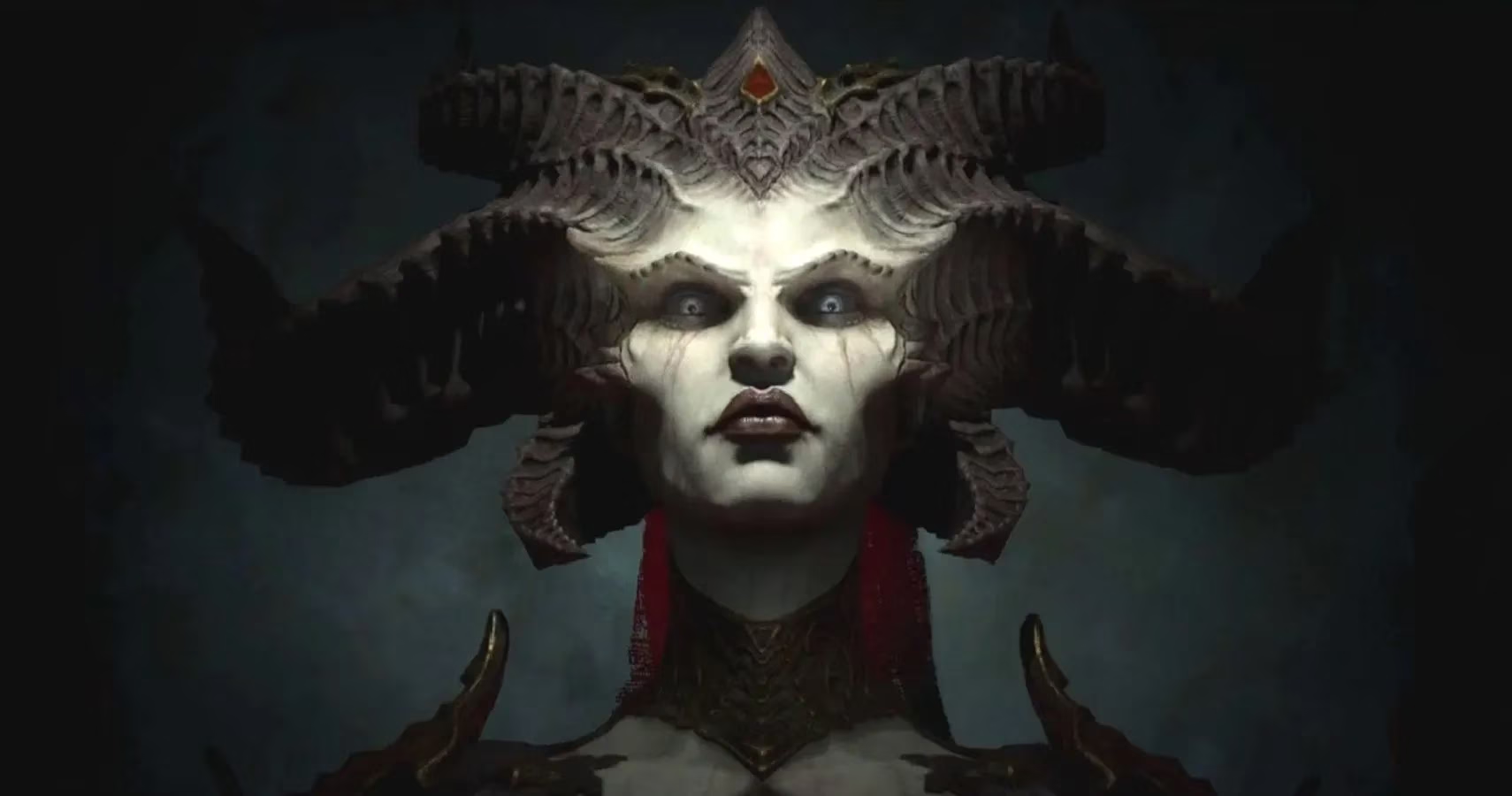
The earnings call did not provide a release window for Diablo 4, but executives confirmed that the team was making great progress on the triple-A action RPG. Although the main game remained in active development, Blizzard offered a few smaller consolation prizes: more news would eventually surface about Diablo 2: Resurrected, the remake of the beloved classic, and Diablo Immortal, the mobile title that had drawn both curiosity and skepticism. For players eager to return to Sanctuary, the promise of interim updates felt like a small torch in a dark dungeon.
Overwatch 2: A Major Internal Milestone
On the Overwatch front, the picture was similarly vague but quietly optimistic. According to the executives, Overwatch 2 had reached a significant internal milestone in December 2020. Hundreds of developers were testing key features of the sequel, a crucial step for a project that needed to expand beyond the original hero shooter rather than simply repeat it. The team planned to hire new talent focused specifically on refining those features, a sign that polish and long-term health mattered more than a rushed launch.
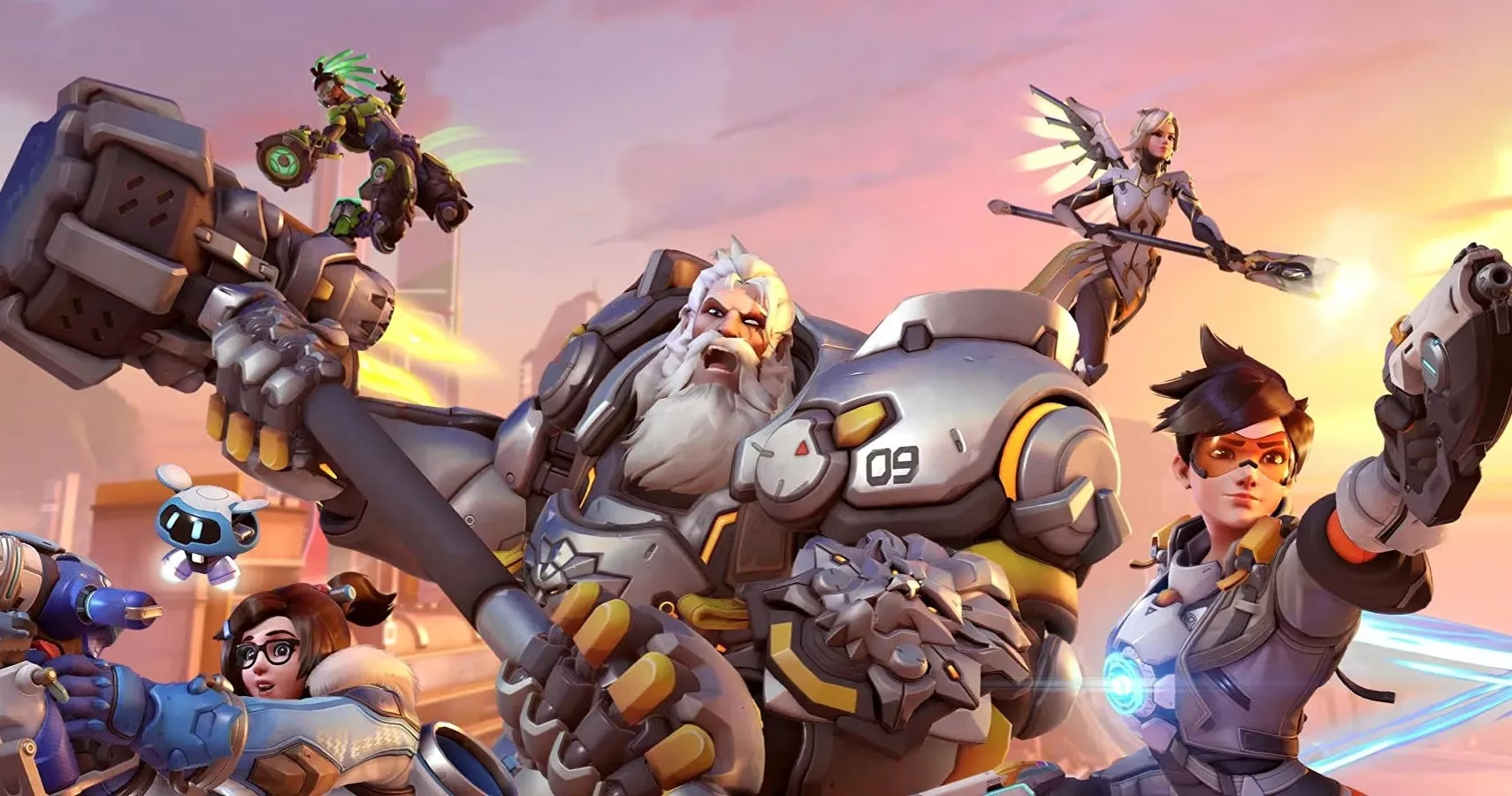
The decision to continue hiring also revealed the scale of the undertaking. Overwatch 2 was never going to be a modest update; it was being treated as a full sequel with new maps, heroes, modes, and structural changes. But in early 2021, all of that remained behind closed doors.
A Shared Silence Since BlizzCon 2019
Both titles had been officially announced at BlizzCon 2019. Diablo 4 appeared with a dark cinematic tone and gameplay details that thrilled long-time franchise devotees. Overwatch 2 arrived three years after the original game had reshaped the team-based hero shooter genre. Yet after those grand reveals, meaningful updates slowed. The global pandemic complicated development across the entire industry, forcing teams to adapt to remote workflows and ever-changing production schedules. Even so, many fans had circled 2021 on their calendars, hoping that at least one of the two projects would make it to store shelves or digital libraries.
The Wider Company Vision
The fourth-quarter earnings release softened the disappointment with a broader statement: the company was making significant progress against its developmental pipeline for other key intellectual properties, which it expected to fuel further growth in 2022 and beyond. While that wording almost certainly included Overwatch 2 and Diablo 4, it also suggested a deliberate, long-range strategy. Activision Blizzard was not simply looking at the next quarter but at the next era of its biggest franchises.
From 2021 Disappointment to 2026 Reality
Looking back from 2026, that frustrating earnings call became an important chapter in a much longer story. Overwatch 2 eventually launched in October 2022, shifting to a free-to-play model with a seasonal battle pass and a new live-service rhythm. The transition was not without controversy, especially around the evolving PvE content, but it brought a huge influx of new players and kept the hero shooter relevant in a crowded market.
Diablo 4 followed in June 2023, delivering a darker, open-world vision of Sanctuary that resonated with both veterans and newcomers. It became one of Blizzard's fastest-selling releases and has continued to expand through seasonal updates, balance changes, and major content drops. By 2026, both franchises have moved far beyond the uncertainty of 2021, but the memory of that quiet earnings call still lingers as a reminder of how long good games can take.
| Title | Announced | Status in Early 2021 | Later Release |
|---|---|---|---|
| Overwatch 2 | BlizzCon 2019 | Internal milestone in Dec 2020, no 2021 release expected | October 2022, free-to-play live service |
| Diablo 4 | BlizzCon 2019 | In active development, no 2021 release expected | June 2023, seasonal action RPG |
In the end, the 2021 delay announcement did not mark the failure that some feared. Instead, it became a turning point in how the studio communicated long development cycles. The road was longer than many had hoped, but the destinations eventually arrived with enough ambition to justify the wait.
Leave a Comment
0 Comments