Overwatch 2's First Halloween Event: A $26 Kiriko Skin and a 43-Week Grind
Overwatch 2 Halloween event review exposes pricey Kiriko skin and controversial cosmetic store changes.
When Overwatch 2's first Halloween event rolled around, the sequel had barely left the spawn room. The community expected spooky skins, Junkenstein modes, and enough candy-colored cosmetics to make a loot box blush. Instead, players got a shop refresh that felt less like Halloween and more like a haunted checkout screen. In previous years, Overwatch players could grind levels and complete daily arcade games to earn loot boxes. Those boxes contained a chance at new seasonal cosmetics. With the move to a free-to-play model, however, the old system was replaced by a direct store, and the prices were scarier than any Reaper ambush.
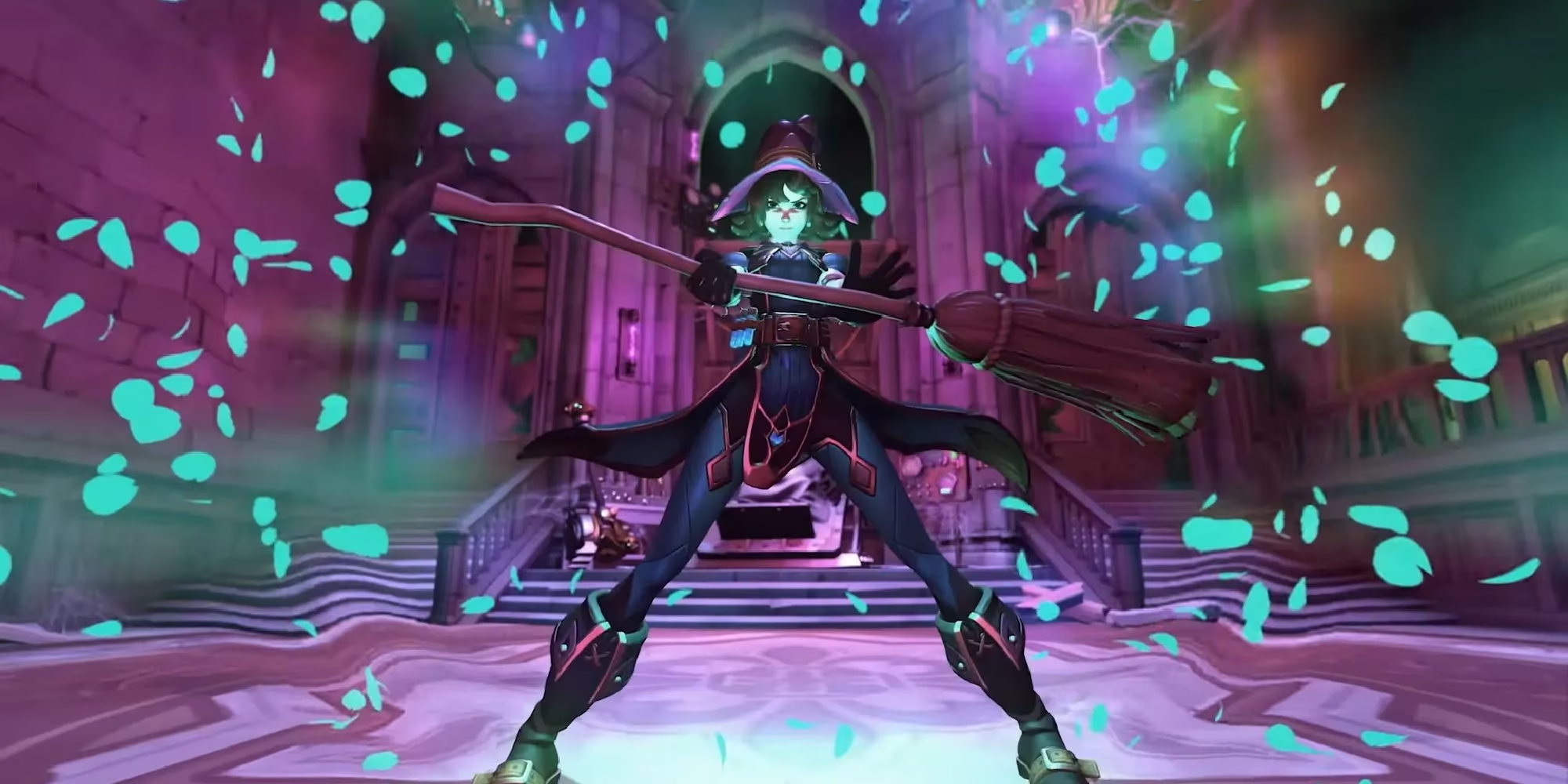
The centerpiece of the controversy was Kiriko's first Halloween skin. It was not available as a standalone treat. Players had to buy a bundle that cost $26, and it was listed as "29% off." That sounds like a deal, but a discount only matters if the original price was reasonable. More frustrating was the coin system. Overwatch 2 only offered $5 and $20 coin packs at the time. There was no $26 or $30 option. That meant a player either had to buy $50 worth of coins or rely on weekly challenge coins to cover the awkward gap. Either way, the math was not exactly festive.
Loot Boxes Left the Party
In older events, players could buy any Halloween-themed skin during the Halloween season directly through the character menu. Older skins were also discounted if they were not new. That system made seasonal shopping feel flexible and player-friendly. Under the new model, however, players had to wait for skins to appear in a bundle or be sold separately in the store during the two-week event window. If a desired skin did not rotate in, tough luck. The convenience of the old menu was gone, replaced by a storefront that seemed designed to create scarcity and urgency.
Could players simply ignore the store and earn the new skin through play? The short answer: sure, if they treated Overwatch 2 like a part-time job for almost a year.
Day One "Sales" Are Suspicious
At launch, the event featured five bundles for original Overwatch skins, including Cassidy's Van Helsing cosmetic and Soldier 76's Slasher getup. Each bundle cost more than $20. Despite the event having just launched, everything was listed as on sale with slashed prices. That raised an obvious question: how can a brand-new bundle be discounted on day one? A sale should imply a previous price, but the items had never been sold before. It was the kind of pricing theater that made players feel less like guests at a Halloween party and more like marks at a carnival game.
Challenges Offered Trophies, Not Treats
The event did include a new PvE mode and new challenges. That part was genuinely welcome. In previous years, players could grind those challenges for loot boxes and lower-tier skins. Under the new system, however, the rewards were far less meaty. Completing challenges offered voice lines, battle pass XP, and nameplates, but no skins. For players who cared about cosmetics, the challenge system became a side dish with no main course. The fun Halloween gameplay was there, but the wardrobe payoff was locked behind the shop.
The 43-Week Grind and the One-Year Wait
Here is where the math gets genuinely absurd. If a player wanted to earn enough coins for the Kiriko bundle through weekly challenges alone, the game handed out only 120 coins over the two-week event period. That works out to 60 coins per week. To reach the bundle price, a player would need to play for roughly 43 weeks, just nine weeks shy of a full year. And that assumes perfect attendance: completing every weekly challenge without missing a single one. By the time the coins were saved, the event would be long gone. One could technically have enough by the next year's event, but that is a strange definition of "earning" a seasonal skin.
| What you wanted | What you actually got |
|---|---|
| Kiriko Witch skin in-game | A $26 bundle with awkward coin math |
| Loot box grind | Voice lines, XP, and nameplates |
| Direct seasonal skin purchase | Store rotation and bundle roulette |
| A Halloween treat | A haunted checkout screen |
A Shop Refresh in a Halloween Costume
Many players pointed out that the event had become, in practice, a PvE mode with a shop refresh attached. The actual cosmetics, which had once drawn so many people to Overwatch's seasonal festivities, were no longer earnable in a satisfying way. Other themed events were folded into the same store logic, making the whole celebration feel like a storefront wearing a costume. Was it a trick, a treat, or just an invoice? 🎃
Looking back even from a few years later, the first Overwatch 2 Halloween event remains a perfect case study in how free-to-play monetization can sour a community. The gameplay was still there, the PvE had potential, and the art team clearly did its job. But when a single skin costs more than a movie ticket and requires either extra coin bundles or a 43-week grind, players can be forgiven for feeling like the real horror was in the pricing. 💸
Leave a Comment
0 Comments