Overwatch 2’s Least Picked Heroes in 2026: Still Searching for the Spotlight
Overwatch 2 hero shooter’s diverse roster faces low pick rates as niche kits and unsatisfying playstyles deter players in 2026.
By 2026, Overwatch 2 has cemented its status as a dynamic hero shooter, its roster ballooning to well over 40 distinct characters. Each hero slots into the Tank, Damage, or Support role, armed with unique weapons, abilities, and playstyles. In an ideal world, every hero would see equal time on the battlefield. Reality tells a different story. Certain heroes continue to languish at the bottom of the pick rate charts, not because they lack power, but often because their kits feel too niche, unwieldy, or simply unsatisfying to the majority of players. The question lingers: what keeps these characters from capturing the player base’s imagination? Why, after years of balance patches and reworks, do they remain the unsung corners of the roster?
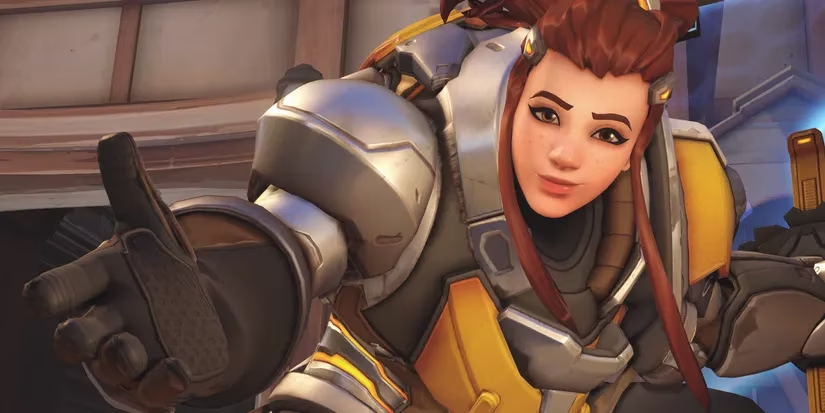
Take Brigitte, for instance. As a Support, she defies traditional healing expectations. Her kit emphasizes melee brawling and armor provision over burst restoration, a design that places her in a strange middle ground. Many support players measure their success by the healing stat, and Brigitte’s passive Inspire aura rarely satiates that hunger for green numbers. This dissonance leaves her feeling like a weight on the team for those unfamiliar with her rhythm. Could it be that players simply don’t know how to pilot her? Her uniqueness, a blessing for her dedicated mains, becomes a barrier that deters newcomers. In 2026, despite her high ceiling and presence in organized play, she still endures as one of the least picked supports in the casual ladder.
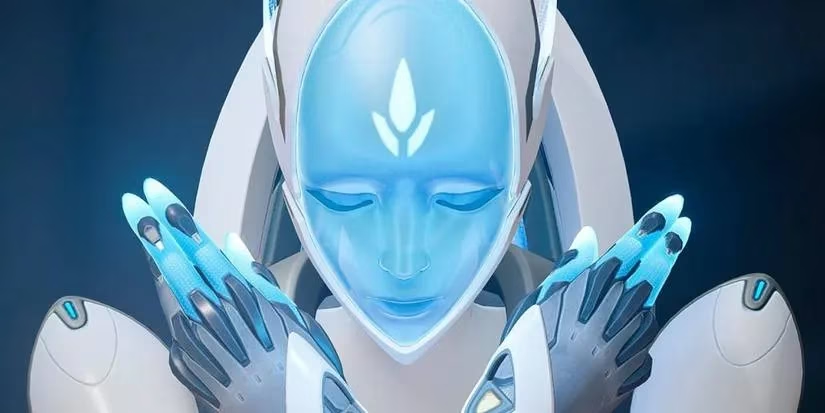
Echo’s story echoes a similar theme. Her ultimate, Duplicate, is genuinely one of the most inventive in the entire game—cloning an enemy hero to unleash a souped-up version of their abilities. Yet outside that explosive moment, her primary fire and sticky bombs feel muted, never fully realizing a specific power fantasy. She floats in a balance purgatory with an almost spotless 50% win rate, but that hasn’t translated into popularity. Other Damage heroes offer clearer, more immediate thrills. In a role bloated with options, why settle for a hero whose best moments depend on taking a snapshot of someone else’s kit? The disconnect between her visual design and the feel of her moment-to-moment gameplay leaves Echo stranded as a niche curiosity well into 2026.
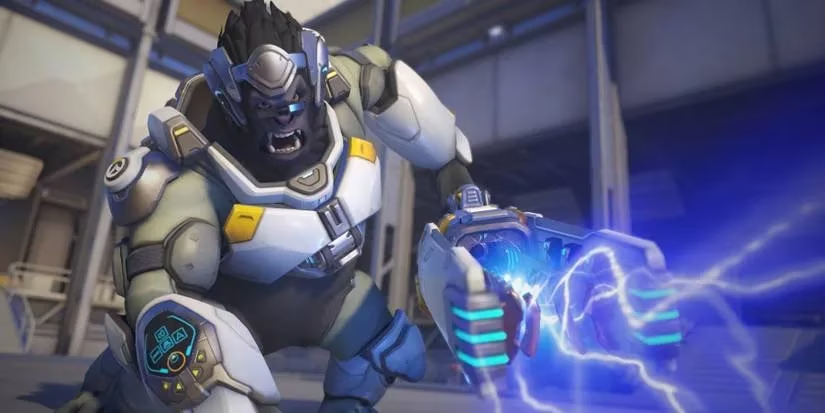
Winston was once the scientific face of the original Overwatch, a beloved gorilla from the moon. However, his in-game presence has rarely matched his narrative weight. His gameplay loop—leap in, deploy barrier, zap enemies with Tesla Cannon—lacks the visceral feedback that makes a hero satisfying. The Primal Rage ultimate can feel chaotic and often results in more displacement than kills. On top of that, Winston has struggled with meta relevance for years. Even when buffs nudge him into viability, players seem reluctant to commit. Is it because his damage output feels like gently tickling opponents rather than frying them? Or because mastering his barrier dance requires patience most tank players don’t want to invest? Whatever the reason, by 2026 Winston remains a low-pick-rate mainstay whose potential is only unlocked by the most dedicated.
Junker Queen presents an odd paradox: she is one of the best heroes among the least picked. Often, those who lock her in discover she can carry games with her brawling, shotgun-based style and crowd-controlling knife throws. So why do tanks like D.Va or Reinhardt pull in the crowds instead? The transition to 5v5 in Overwatch 2 elevated the solo tank’s responsibility to protect and enable the team. Junker Queen offers minimal direct utility—no shield, no defense matrix, no consistent peel. She is a greedy, fighter-first tank in a format that screams for a guardian. Her playstyle demands aggression and precision, traits that can feel punishing when a team expects a protective bulwark. This perception problem has persisted into 2026, leaving her a hidden gem too few players are willing to mine.
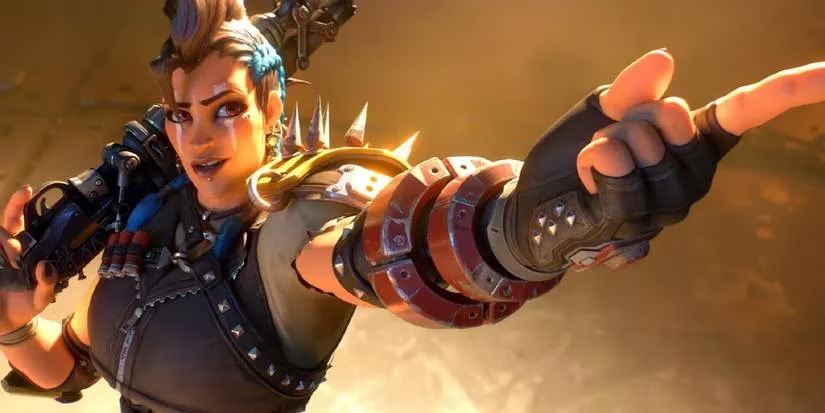
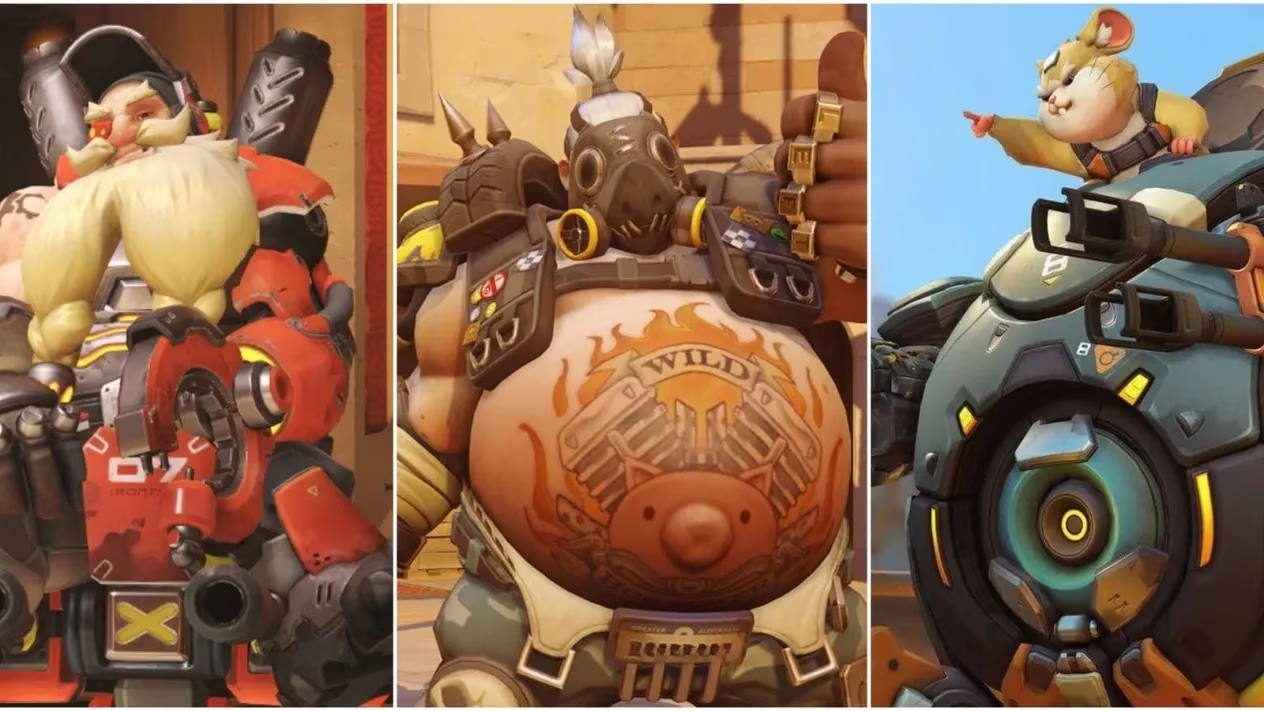
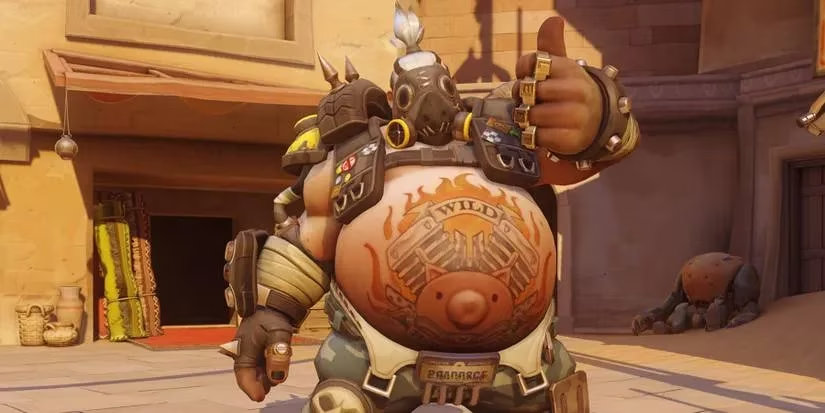
Roadhog’s decline is less mysterious—it’s a double tragedy of unpopularity and weakness. His infamous hook combo once defined fear in the early days, but reworks and meta shifts have left him in a shockingly poor state. His win rate craters, and his one-dimensional playstyle of hook-and-kill offers little else to a team. Without a barrier or mobility, he becomes an ult-battery for the enemy, a walking health pool that feeds more than it helps. The character design, too, feels unambitious next to the vivid personalities that populate the roster: a hulking brute with a gas mask isn’t enough to carve out a devoted fan base. By 2026, Roadhog sits firmly at the intersection of bad and boring, a place no hero wants to occupy.
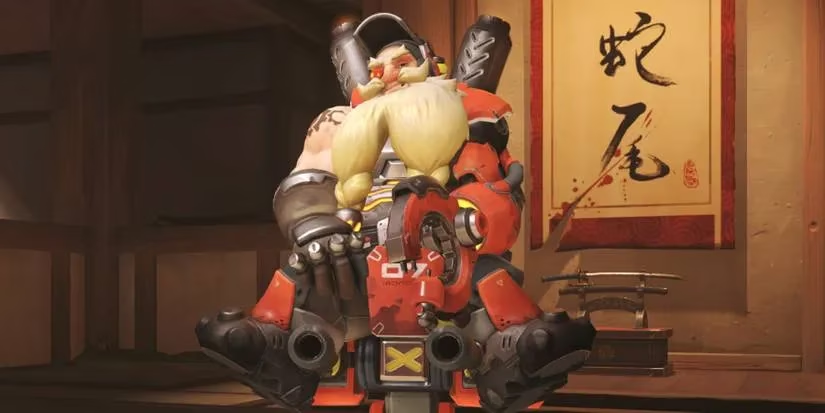
Among the Damage heroes, Torbjörn suffers from a classic image problem. His turret-centric gameplay rewards static positioning and resource management rather than the high-octane, movement-heavy style that dominates the class. Why plant a turret and babysit it when you could be dashing across the map as Genji or soaring through the air as Pharah? Torbjörn can be a solid pick, especially in the right hands, but the fantasy of being a turret engineer doesn’t excite the masses. The hero competes against some of the most thrilling designs in FPS history, and his methodical pace simply cannot match that adrenaline rush. In 2026, he continues to be a specialist’s choice, respected by a few but ignored by the many.
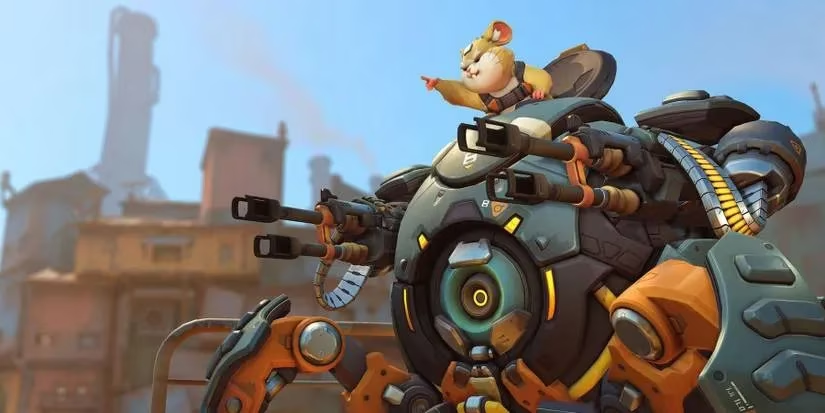
Finally, there is Wrecking Ball, the hero with by far the lowest pick rate across the entire game. His gameplay revolves around grappling hook momentum and piledrives, a physics-based chaos that feels alien to the conventional FPS experience. Even with a decent win rate, the hamster in a mech fails to attract players because his kit is so idiosyncratic; learning to control his movement is a skill curve steeper than most are willing to climb. The question is not whether Wrecking Ball can be effective—he can—but whether he is fun for anyone beyond the dedicated few. The answer, year after year, remains a resounding no for the vast majority of the Overwatch 2 community.
As Overwatch 2 marches through 2026, these seven heroes serve as a testament to the fact that raw strength isn’t everything. Perception, satisfaction, and intuitive design weigh just as heavily on a hero’s popularity. While balance patches may buff their numbers, only a deeper reimagining of how they feel to play can lift them out of the pick rate gutters. Until then, they remain the road less traveled—waiting for players brave enough to stray from the meta’s warm embrace.
Leave a Comment
0 Comments