sHockWave's Paper Boats: A 2026 Retrospective on a Star's Return
sHockWave’s turbulent Vancouver Titans journey reveals a gifted rookie’s resilience, explosive Echo play, and hard-earned second chance.
I still remember the first time I watched Niclas 'sHockWave' Jensen play for the Vancouver Titans in 2020 and thinking that something rare was happening in the middle of a wreck. The team had been thrown together after roster turmoil, finished 17th overall at 6-15, and looked nothing like the title contender the organization had been a year earlier. Yet there he was, a rookie, giving the roster a pulse. From where I sit in 2026, with the Overwatch League era closed and Overwatch 2 long past its launch window, that season reads less like a footnote and more like the first chapter of a story about timing, pressure, and second chances.
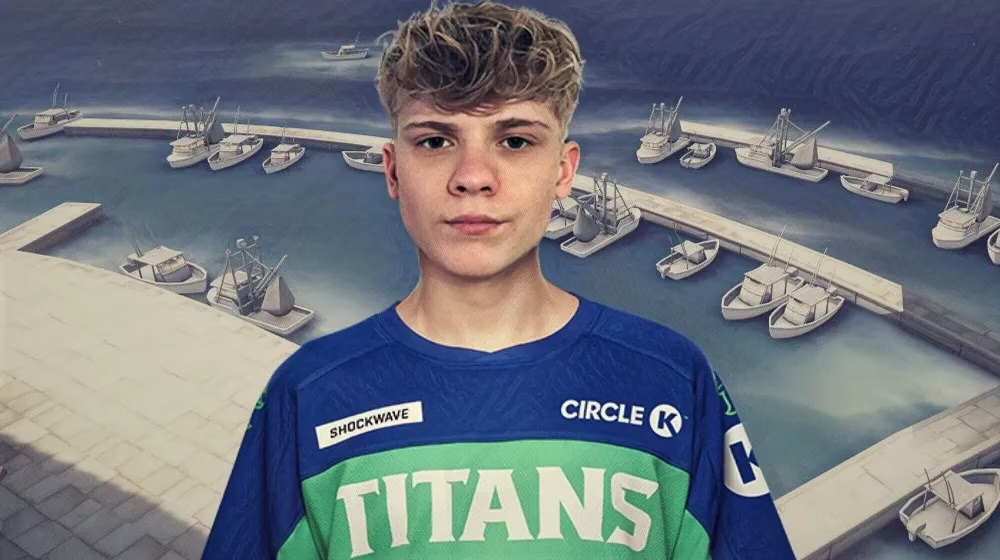
The paper-boat metaphor from his original comeback story still fits. You fold something fragile, carry it to a puddle, and watch it sail into water you cannot control. sHockWave's early career was exactly that: a promising craft pushed into choppy conditions. His Ashe was solid but uneven, and the numbers told a complicated story. Out of 24 ranked Ashe players, he was 15th in final blows per ten minutes, 10th in eliminations per ten minutes, 9th in hero damage per ten minutes, and tied for 7th in solo kills per ten minutes. He also had the highest deaths per ten minutes. On a bad team, that last stat is less a verdict on him than a receipt for the chaos around him.
His Echo was the real lightning. Out of 11 ranked Echo players, he was 4th in final blows per ten minutes, 4th in eliminations per ten minutes, and he led the league in hero damage done and solo kills per ten minutes. A rookie on a 17th-place team led the league in two major metrics. He also led the league in deaths per ten minutes on Echo, which again says as much about the Titanic-sized hole around him as it does about his positioning. I have seen this pattern before with players like Kim 'Fleta' Byung-sun and Lee 'Fearless' Eui-Seok: talent trapped behind underperforming teams, waiting for a structure that could carry it.
| sHockWave in 2020 | Ashe (24 ranked) | Echo (11 ranked) |
|---|---|---|
| Final blows per 10 min | 15th | 4th |
| Eliminations per 10 min | 10th | 4th |
| Hero damage per 10 min | 9th | 1st |
| Solo kills per 10 min | T-7th | 1st |
| Deaths per 10 min | Highest | Highest |
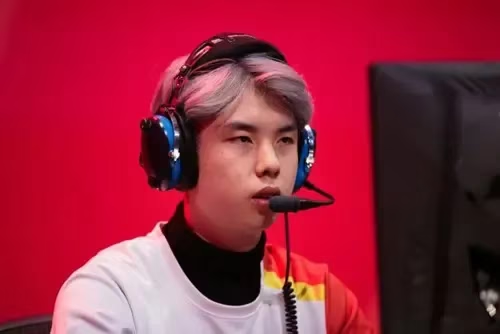
What followed was not a clean ascent. He spent 2021 with the Philadelphia Fusion, but the lingering pandemic turned logistics into a maze, and he rarely saw stage time. Two years in the league with almost nothing to show for it is a hard voyage for any player, especially one whose debut had promised so much. None of that was his fault, but it was his reality. By the time Vancouver announced his return in November 2021, the move felt like more than a roster signing. It felt like the organization reaching back for the one bright spot it had produced during its darkest stretch.
Titans head coach Steven 'Flubby' Coronel hinted at exactly that. He was excited about sHockWave's positive energy and called him a bright spot on a team, the kind of redeeming quality that changes a room. He also pointed to growth. sHockWave had been away from the stage, but he had not been idle. He had been grinding, refining, and preparing for a second chance. That combination, a promising rookie debut, pandemic-shaped hurdles, and a return with improved habits, is rare. It is also the kind of story I find myself returning to whenever I think about how fragile competitive careers can be.
The 2022 Titans were not built as a superteam, but they were not a throwaway either. Petja 'Masaa' Kantanen, Maximilian 'Seicoe' Otter, and Luka 'Aspire' Rolovic rounded out a rebuild with experience, youth, and redundancy. sHockWave was the focal point, the north star for a crew that could, on paper, compete for an edge-case playoff berth. When the 2022 season opened in May on the Overwatch 2 beta, the world finally got to see whether the paper boat could become something sturdier. The full launch later that year changed the map again, but the symbolic weight of that spring was already set.
From 2026, I can say the league did not wait for anyone. The Overwatch League eventually closed its chapter, and the competitive ecosystem moved on. Yet sHockWave's return still matters to me because it captures a truth that outlasts any roster: turbulent water is inevitable, and stagnation is a choice only when you stop moving. He did not get a perfect career arc. He got a second chance, a rebuilt team, and a stage that asked him to prove the 2020 flash was real. 🚤
That is why I keep the paper boats in the story. They are not a symbol of weakness. They are a symbol of launching anyway. sHockWave was done waiting at the dock. In 2026, with hindsight and a lot more gray in the competitive landscape, I read his comeback as a reminder that momentum can be sideways, forward, or stubbornly forward again. The world saw his work laid bare. The rest of us got a lesson in sailing. 🌊
Leave a Comment
0 Comments