The Nostalgia Trap: How Live-Service Games Are Eating Their Own Tails
Gaming industry trends in 2025 highlight a nostalgic regression, with live-service games like Fortnite and Overwatch 2 resurrecting past content. This shift from innovation to institutionalized nostalgia reflects a broader creative stagnation across the industry.
As a seasoned gamer who has navigated countless digital worlds, I find myself in a strange and reflective mood in 2025. The gaming landscape feels increasingly like an endless hallway of mirrors, where every new announcement is merely a reflection of something we've already seen and played. The recent moves by titans like Fortnite and Overwatch 2 to resurrect their own past—the OG map as a permanent fixture, the classic 6v6 mode returning for events—are celebrated as gifts to the community. And they are, in a sense. There is genuine joy in revisiting a beloved, familiar space, a digital homecoming. Yet, beneath that surface-level celebration, I can't shake the feeling that we are witnessing something more profound and, frankly, a bit grim. We are not just celebrating nostalgia; we are institutionalizing regression. These live-service behemoths, once the vanguards of perpetual evolution and the "games as a platform" future, are now actively cannibalizing their own history, not to build upon it, but to retreat into it. It feels less like a bold new season and more like a comforting, yet ultimately stagnant, rerun.
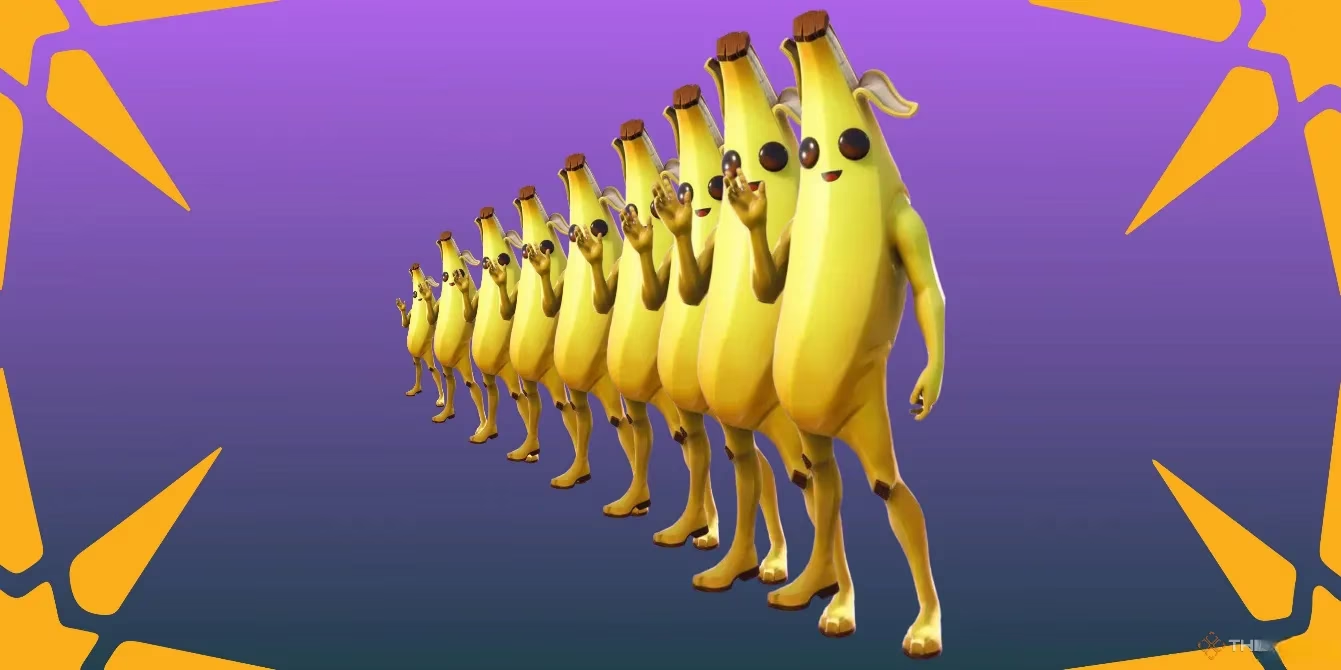
The core promise of live-service games was a forward march. They were the antithesis of the static, single-playthrough experience. Their entire ethos was built on dynamism: new narratives, novel gameplay mechanics, fresh maps, and evolving metas. Sure, they'd occasionally trot out a legacy skin or a retro map as a limited-time treat—a nod to the veterans. But the bargain was clear: we commit our time and, often, our wallets, and they commit to delivering new content. Now, that contract feels rewritten. The most significant "content drops" are often excavations. Overwatch 2's reintroduction of the 6v6 format, while doubtlessly fun for its ardent proponents, isn't an innovation; it's a reversion to a pre-sequel state. The argument for preservation is valid—live-service games have a notorious legacy problem. When a game's world is in constant flux, it creates a barrier for returning players and erases its own history. Fortnite making its foundational map permanent does solve that archival issue. But in solving it, they've also made a profound statement: our past is now a core, immutable part of our present product. The future is being actively curated from yesterday's code.
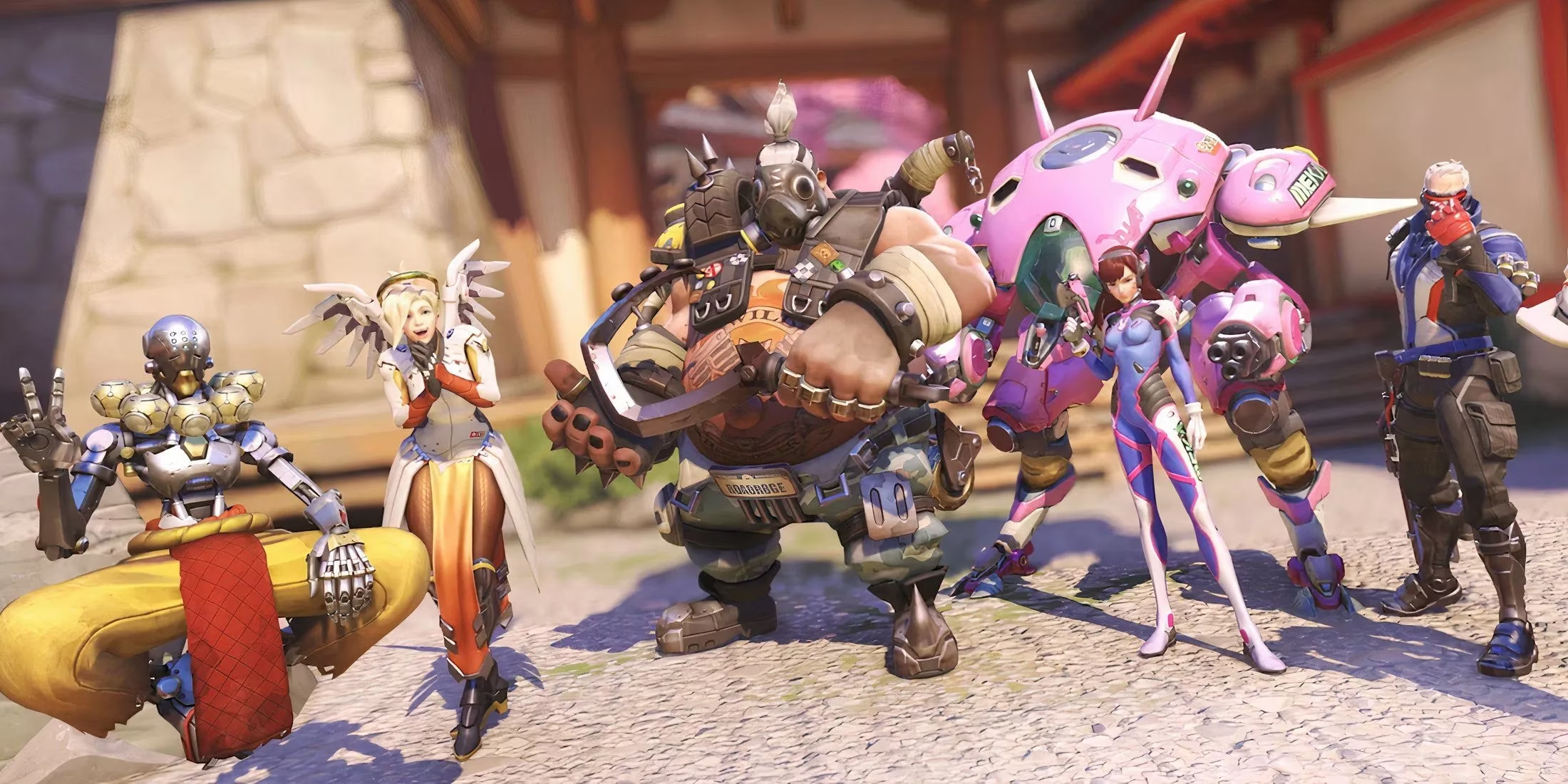
This phenomenon isn't isolated to the multiplayer sphere; it's a pervasive industry-wide ailment. We exist in a cultural feedback loop where everything is a remake of a remake. The film industry has long since followed gaming's lead, churning out reboots and legacy sequels where intellectual property (IP) recognition trumps original storytelling. Gaming, however, is rapidly approaching a creative event horizon. We've remade the classics, and now we're remaking the remakes, or simply re-releasing the originals with a fresh coat of graphical paint. The charming lie we were sold—that successful remakes would greenlight new entries in beloved series—has been thoroughly debunked. Look at Dead Space: its superb remake was meant to pave the way for a Dead Space 2 remake, but that project was scrapped. The conversation never even broached the possibility of a Dead Space 4. Similarly, the discourse after the Silent Hill 2 remake isn't "what incredible new psychological horror will Bloober Team create next?" It's "which classic should be remade next?" The answer, which the industry refuses to hear, is none of them. We are training ourselves, as an audience, to settle for reheated meals and calling it a feast.
Now, let me be perfectly clear: I am not a remake purist. There are stellar examples that justify their existence:
-
Resident Evil 4 (2023): It masterfully preserved the quintessential campy-horror atmosphere and tight gameplay of what I consider one of the greatest action-horror games ever made, while modernizing controls and expanding narratives. It felt like a respectful reimagining.
-
Silent Hill 2 (2024): It has introduced a legendary, emotionally devastating story to a generation of players who would never have navigated the foggy streets of the original PlayStation 2 version. That is an undeniable cultural good.
These are brilliant, individual victories. But they are exceptions that prove a depressing rule. They are used to justify an industry-wide pivot toward low-risk, high-reward retreads. The cost is the slow suffocation of original, mid-budget IPs and the cynical expectation that fans will happily repurchase their memories at a premium.
So, where does this leave us, the players, in 2025? On one hand, I will probably log into Fortnite to drop onto the OG map for a hit of pure, uncut 2018 nostalgia. I might queue for a 6v6 match in Overwatch 2 and remember the chaotic, shield-heavy team fights of yore. The fun will be real, and it's not wrong to enjoy it. But I can't view these moves in a vacuum. They are symptoms of a larger creative stagnation. When the most popular games in the world decide their best path forward is to look backward, it sends a message to every developer and publisher: new is risky, old is safe.
The resources—the thousands of developer hours, the millions in budgets—poured into meticulously rebuilding old maps and rebalancing old modes are resources not spent on dreaming up the next iconic world. Our money, spent on Battle Passes and cosmetic bundles in these nostalgia-driven seasons, is a vote for what we want more of. And right now, we seem to be voting overwhelmingly for comfort food. It creates a paradox: we crave the stability of the familiar in our ever-changing live-service games, but in satisfying that craving, we ensure the game's evolution plateaus. The constant change we signed up for is being replaced by cyclical repetition.
Perhaps I'm just a jaded veteran, shouting into the storm. If millions are happy, who am I to say this is wrong? But as a professional player and observer of this medium, my concern is for its long-term health. A garden cannot thrive only by repotting old plants; it needs new seeds. When Fortnite and Overwatch start remaking themselves, it's not just a cute callback. It's the most potent symbol yet that gaming, in its relentless pursuit of player retention and IP monetization, has begun to consume its own tail. The future feels less like an undiscovered country and more like a meticulously preserved museum, where the most exciting new exhibit is a refurbished wing from the early 2000s. I'll visit, but I dearly hope we haven't decided to live there permanently.
Leave a Comment
0 Comments