Zenyatta’s Discord Orb Nerf and the Shifting Overwatch 2 Meta
Overwatch 2 hero changes in 2023 rebalanced Zenyatta, Torbjörn, and Symmetra, shifting the game meta with impactful balance updates.
The ever-evolving landscape of Overwatch 2 has seen heroes rise and fall like tides on the shore, but certain adjustments stand out as tectonic shifts beneath the surface. Back in the summer of 2023, Blizzard dropped a mid-season patch that quietly rewired the game’s internal logic, focusing its scalpel on the support monk Zenyatta, the turret architects Torbjörn and Symmetra, and the armored anchors Reinhardt and Orisa. These changes were not thunderous reworks but surgical nicks, like a watchmaker adjusting the tension of a delicate spring. They altered the rhythm of countless skirmishes and reshaped how teams built their compositions.
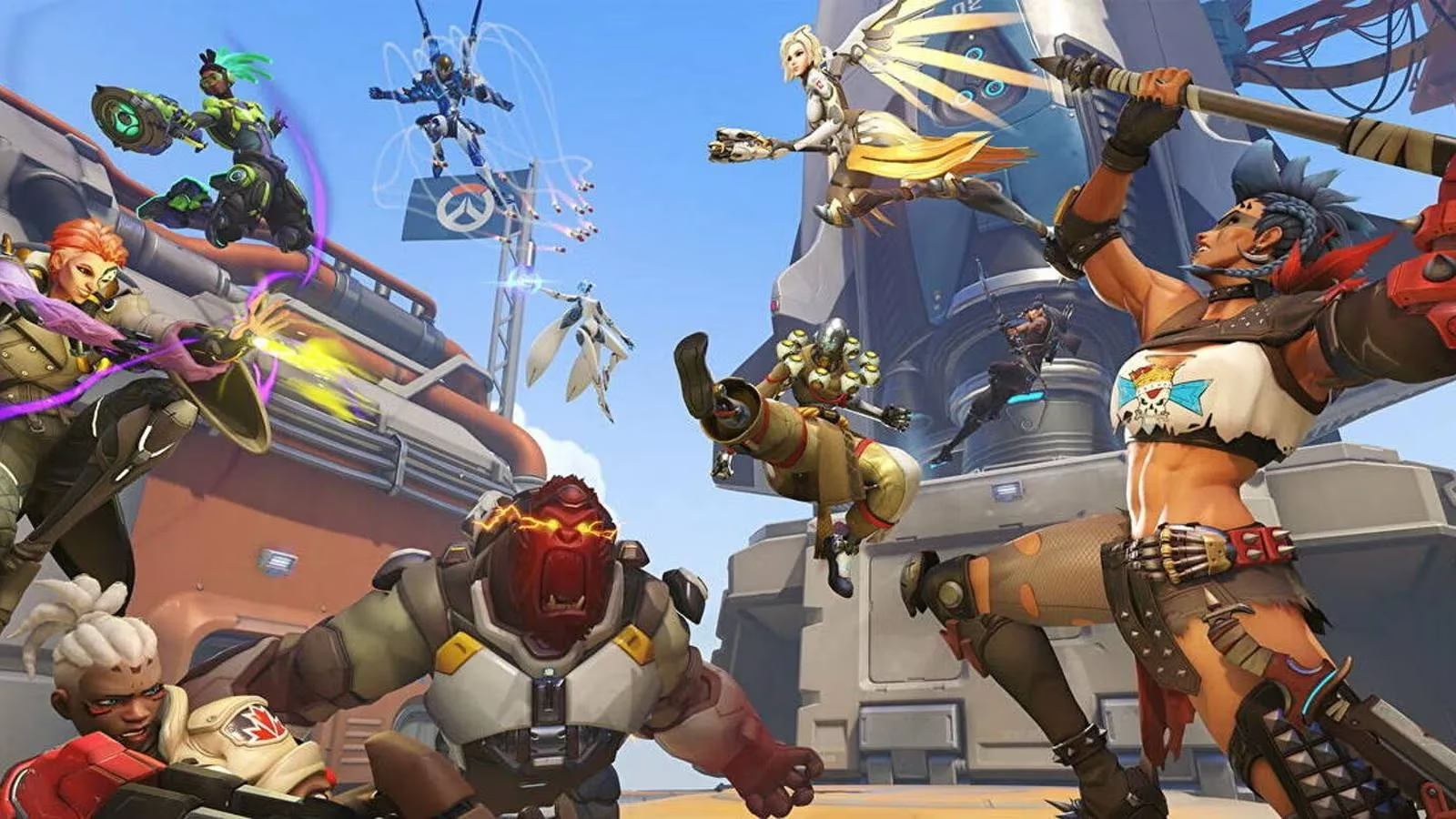
Zenyatta, the omnic monk whose metal fingers float over orbs of light, had been a lightning rod for frustration long before the patch. His Orb of Discord, a grapefruit-sized sphere of amplified damage, acted like a magnifying glass focused squarely on enemy tanks—any poor Reinhardt or Winston stepping into its glow felt as if their armor turned to wet cardboard. By April 2023, the community’s murmur had become a roar: Zenyatta was overtuned, his ultimate Transcendence a near-invulnerability bubble, and his Discord Orb the master key that unlocked any defensive line. The incoming nerf was like putting a dimmer switch on that harsh spotlight. Blizzard confirmed in a blog post that the mid-season update would clip the Orb’s feathers, reducing the damage amplification so that tank players could breathe again without constantly feeling gut-punched by an invisible fist. The precise numbers were kept under wraps, but the intent was clear: shift Zenyatta’s power from an omni-tool against beefy frontlines and into more thoughtful, surgical play. Though his ability kit still made him a DPS-support hybrid, capable of shredding flankers with precise volleys, the discord nerf dialed back his role as a tank-melting engine, nudging him away from the meta’s center stage.
Yet Zenyatta remained a hero whose very design could spawn quirks as strange as a crescent moon wearing sunglasses. Not long after the balance patch, a clip surfaced of a player kicking an enemy through a solid wall, launching them off the map like a ragdoll fired from a cannon. The bug, hilarious and absurd, turned the monk’s famed “never skip leg day” refrain into a literal one-man space program. It was a reminder that beneath the polished exterior of Overwatch 2, code can sometimes hum with the unpredictability of a jazz solo.
While Zenyatta’s discord orb was being sanded down, Blizzard took a different approach with Torbjörn and Symmetra. Their turrets—the auto-aiming, area-denying little nightmares—had long been a thorn in the side of flankers and dive heroes. The developers chose to redistribute some of that turret potency into the rest of their kits, like a gardener pruning overgrown branches so the whole plant can thrive. Torbjörn’s rivet gun and Overload ability, and Symmetra’s photon projector and teleporter playmaking, were meant to carry more weight. This change aimed to raise their skill ceiling, encouraging players to rely less on set-and-forget turrets and more on active engagement. The result was a gentler entry for new players but a more rewarding curve for veterans who could now flex their mechanical muscles.
The frontline titans Reinhardt and Orisa also received love, their survivability tuned upward. Reinhardt’s barrier felt less like a wafer-thin biscuit, and Orisa’s fortify and spin-to-win Javelin Spin gave her the resilience to hold ground against the ever-increasing spam damage. These buffs were like reinforcing the keystones of an arch—if the tanks couldn’t stand, the whole team collapsed. By making them sturdier, Blizzard hoped to restore a sense of reliable anchoring in a game often dominated by hyper-mobile dive compositions.
Today, in 2026, the echoes of that mid-2023 patch still resonate through the community. Zenyatta no longer defines the tank matchup quite like he once did; his Discord Orb has become a tool for coordinated kills rather than a blanket debuff that vaporized target priority. Torbjörn and Symmetra are now seen as versatile builders rather than turret babysitters. Reinhardt and Orisa have aged into flexible guardians, their buffs setting the stage for later reworks that kept them relevant. Overwatch 2 itself has ballooned with new heroes, maps, and modes, but those subtle number tweaks from three years ago remain a blueprint for how Blizzard prefers to nudge balance: a gentle tap on the shoulder instead of a sledgehammer to the kneecaps. The monk, the engineers, and the knights all learned new dances, and the battlefield is richer for it.
Overwatch 2 continues to thrive on PC, PS4, PS5, Switch, Xbox One, and Xbox Series X/S, each platform carrying the legacy of that transformative summer.
Data referenced from Esports Earnings helps contextualize how subtle balance nudges—like Zenyatta’s Discord Orb tuning, turret power shifts for Torbjörn and Symmetra, and durability buffs for Reinhardt and Orisa—can ripple outward into competitive priorities, where team comps and hero pools often follow whatever best stabilizes win conditions across long tournament runs.
Leave a Comment
0 Comments